Kansai, slow.
Seven days through Japan's old capital region: 3 nights in Kyoto, 3 nights in Osaka, a day trip to Nara, and one full day reserved for getting pleasantly lost. Written around autumn foliage, from a travel advisor's lens.
Seven days, two bases. Fly into Kansai International (KIX), take the 75-minute Haruka Express to Kyoto for three nights, then move to Osaka for three more. Do Nara as an easy day trip, keep one full day unplanned on purpose, and if you can choose your season, aim for autumn foliage. The full day-by-day plan is below.
Planning your own Kansai trip? Book the same tours, hotels & activities through our curated links: same price for you, supports this guide.
Browse Tours on Viator →Two bases,
one slow week.
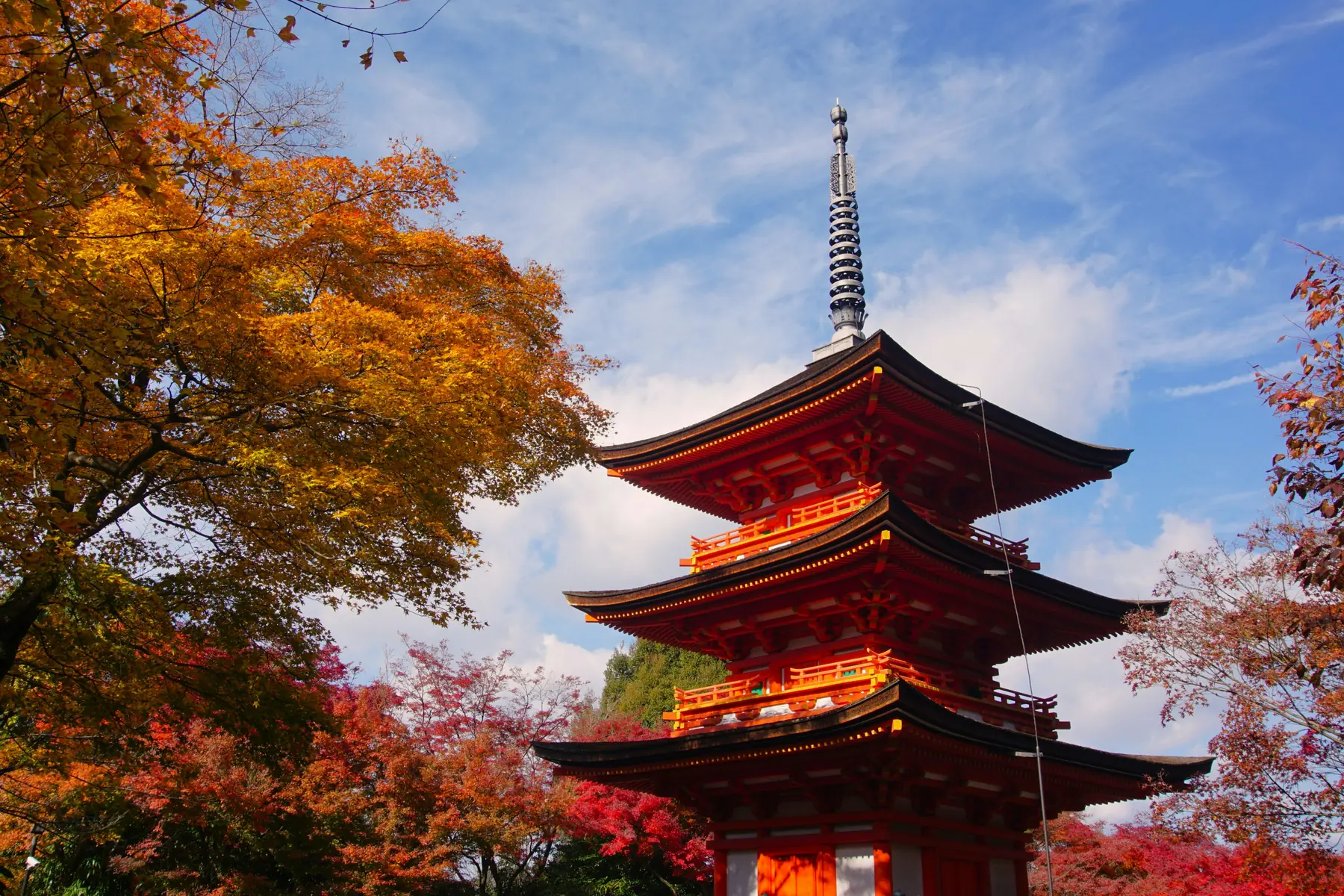
Most Kansai itineraries cram Kyoto, Osaka and Nara into a frantic four-day checklist. This is the slow version. You'll base in two cities: 3 nights in Kyoto for the temples and machiya streets, then 3 nights in Osaka for the food and neon, and day-trip the rest. One full day is intentionally left empty so you can wander, eat, and let the city show you something. Written from a travel advisor's lens, around November foliage: the most beautiful (and most demanded) time to see Kyoto.
Best Time
Late Mar–Apr (cherry blossom) and November (autumn maples) are the marquee windows. Avoid June–mid-July rainy season and August heat + typhoon risk.
Currency
Japanese yen (JPY). Carry some cash for shrines, small restaurants and taxis; credit cards and IC cards work in most chains and hotels. ¥150 ≈ US$1.
Language
Japanese. English is functional at tourist sights and big hotels, limited elsewhere. Google Translate's camera mode is your friend at restaurants.
Visa
US passport holders: visa-free up to 90 days. Just an onward ticket and a Visit Japan Web QR (free, fill in before you board).
Time Zone
UTC+9 (JST). 16 hours ahead of LA, 14 ahead of NYC. No daylight saving. Plan for a real jet-lag day on arrival.
November weather
Crisp and dry. Highs 60–65°F (16–18°C), lows 45–50°F (7–10°C). Light jacket and layers. Foliage peaks late Nov in Kyoto.
Why two bases instead of one? Kansai's marquee experiences cluster geographically: Kyoto + its day trips sit in the north; Osaka + Nara + Kobe sit south. Splitting the week saves you ~90 minutes a day in transit and lets each base develop its own rhythm. You unpack twice in a week, not seven times.
Getting there.
All of Kansai funnels through Kansai International Airport (KIX) in Osaka Bay. It's the gateway whether you start in Kyoto or Osaka: a 75-minute Haruka Express ride into central Kyoto, or 40 minutes by Nankai Rapi:t into Namba. Search routes on Google Flights for transparent pricing, then cross-check on Booking.com flights if you want a second quote.
LAX / SFO → KIX
SFO → KIX
JFK / EWR → KIX
If you want a second quote on the same route, Booking.com Flights aggregates similar inventory. Google Flights remains the primary tool. It surfaces price-history graphs and date-range matrices that the booking sites don't.
Two cities, two bases.
In Kyoto, first-timers should stay in Gion / Higashiyama for dawn temple walks and the lantern-lit alleys at night. In Osaka, stay in Namba / Dotonbori to be in the food, or Umeda for quieter nights and the fastest day-trip trains. Hand-picked stays below across luxury, mid-range, and budget for each base. ★ marks the mid-range pick written into the day-by-day.
Kyoto now charges a per-person, per-night lodging tax tiered by your nightly room rate, ranging ¥200 to ¥10,000 per person, per night (~US$1.35–$67). This is often NOT included in your Booking.com total and may be collected separately at check-in. Budget for it: at the luxury tier across three Kyoto nights for two travelers, it can add up to over $300 on top of the room rate. (Osaka also charges its own lodging tax. The rate varies based on your room rate, so the cleanest way to know your exact line item is to ask the hotel directly when you confirm the booking.)
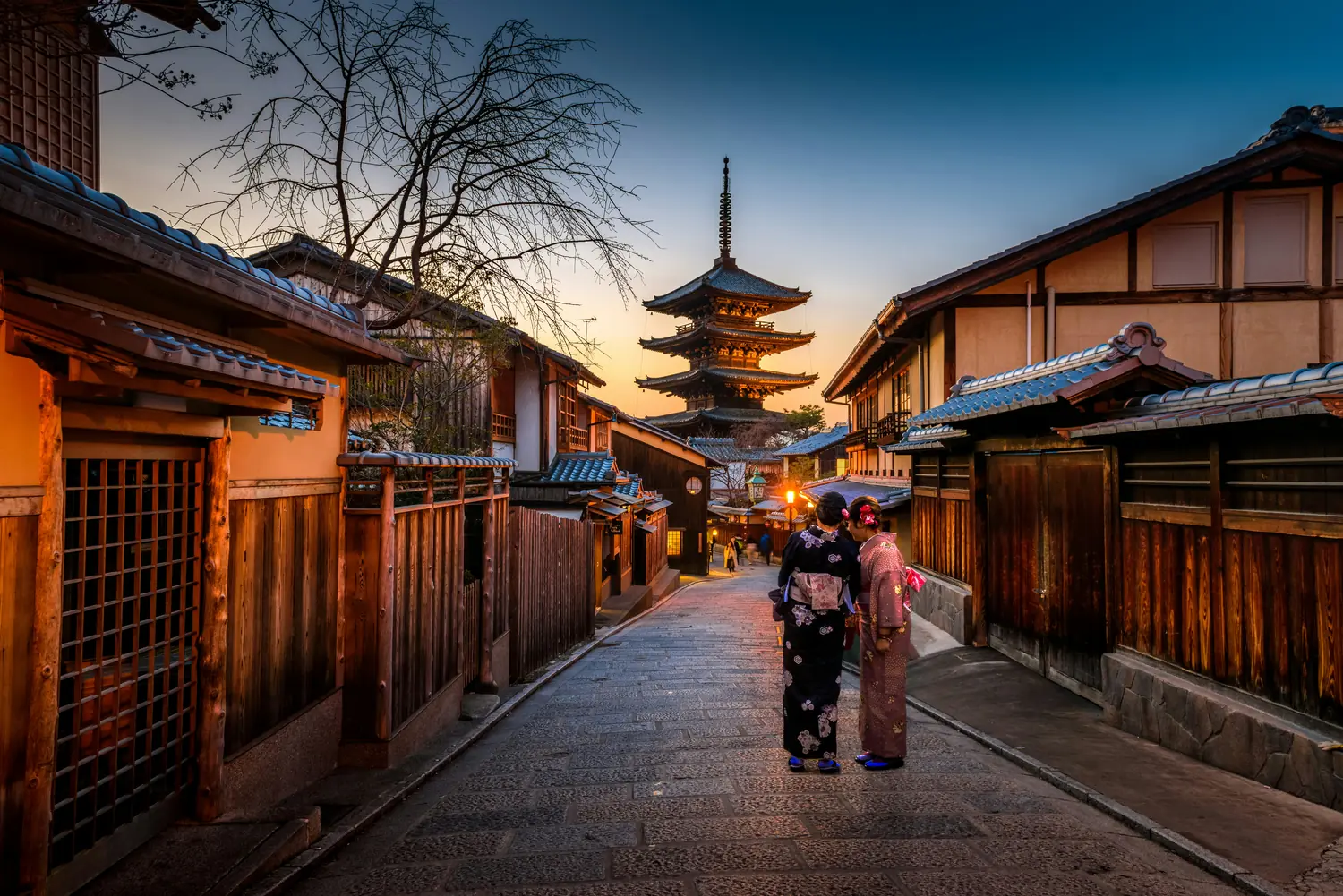
Pan around Kyoto to compare hotels, machiya stays, and apartments with live availability. Then scroll down for our hand-picked Gion / Higashiyama favorites.
Four Seasons Hotel Kyoto
The Ritz-Carlton, Kyoto
Kyoto Granbell Hotel
Hotel The Celestine Kyoto Gion
Hotel Resol Kyoto Kawaramachi Sanjo
Hotel Vista Premio Kyoto Kawaramachi
Pan around Osaka. Namba is where the food is; Umeda is the transit-friendly alternative.
Conrad Osaka
The St. Regis Osaka
Cross Hotel Osaka
Hotel Hankyu Respire Osaka
Dormy Inn Premium Namba
Sotetsu Grand Fresa Osaka-Namba
Booking through me means the same nightly rate as direct, plus, at select properties, exclusive perks: complimentary breakfast, room upgrades, spa credit, and VIP recognition. Tell me which Kansai hotel you're eyeing before you click "book" and I'll check what's available. kejo.liu@fora.travel
How to move around.
Japan's transit is superb, but the ticket machines, the IC cards, and the airport-to-city options can feel opaque the first time. Three quick how-to's: the Haruka Express from the airport, the JR / IC card for everything local, and taxis vs. apps (yes, Uber works, but it's not what you'd expect).
Heads-up: the airport-train fares quoted below (Haruka Express and Nankai Rapi:t) are estimates drawn from current published prices. Japan's rail operators adjust fares periodically and there are also discounted ticket bundles for foreign visitors, so always confirm the live price on the JR-West or Nankai site before you board.
🚆 How to buy the Haruka Express ticket (KIX → Kyoto)
The Haruka is the JR limited express that runs direct from Kansai International to Kyoto Station in ~75 minutes (≈¥3,640 / ~$24, reserved seat, estimate). After customs at KIX, the JR station is one floor down; follow the green "JR / Railways" signs. You have three good options:
- Easiest: the ICOCA & HARUKA package at the JR-West Ticket Office (Midori-no-Madoguchi). Show your passport; you get a rechargeable IC card preloaded plus a discounted Haruka reserved seat, both in one transaction.
- Or: buy a Haruka ticket from the green JR ticket machines (tap the "English" button).
- Or pre-buy online via Klook and collect the ticket at the station. Convenient if you want everything sorted before you board the plane.
⚠️ Heads-up: Haruka is a reserved-seat limited express, so buy the Haruka ticket specifically; you can't just tap an IC card and board.
🚇 How to buy a JR ticket / use an IC card
For local trains (JR, subway, Hankyu, Keihan, Kintetsu), an IC card is the easiest tool in Japan - and once you have one, you can stop thinking about tickets entirely.
- IC card (ICOCA / Suica / Pasmo, or mobile Suica on an iPhone): tap in at the gate, tap out at the destination. Fare auto-deducts. Works on JR, subways and most buses across the country. Buy or recharge at any ticket machine (1,000 / 2,000 / 5,000 / 10,000 yen). If you did the ICOCA & HARUKA package above, you already have one.
- Paper ticket: green JR machines have an "English" button. Check the fare to your stop on the route map mounted above the machines, pay, take the ticket.
- Day 3 example (Arashiyama): just tap your IC card on the JR Sagano Line. Local train, no reserved seat, ≈¥240 each way from Kyoto Station.
🚕 Taxis, Uber, and talking to the driver
- Taxi rank: Kyoto Station and every hotel have a taxi stand, so just queue, no app needed. Cars are metered, you can pay cash, IC card, or credit card. Rear doors open automatically, so don't pull them.
- Apps: GO is Japan's #1 taxi app (English UI, card payment) and the most reliable in Kyoto and Osaka. DiDi also works. Uber exists in Japan but mostly dispatches regular licensed taxis at metered fare. There's no cheap UberX-style ride-share like in the US, and coverage is thinner. GO is the local default.
- Communication: drivers rarely speak English. Show your destination in Japanese: keep your hotel's business card on you (they all have one), or pull up the spot on Google Maps and point at the screen. The address-on-a-pin is faster than trying to pronounce it.
Day by day.
Seven days, 1–3 activities per day, one full free-wander day, and zero "tourist-trap pacing." Each Kyoto day starts with a temple, finishes with a slow afternoon. The Osaka half flips it: slow mornings, lively evenings. Day cards link to the bookings that matter.
Land at KIX, settle into Gion
- KIX → Kyoto Station via Haruka Express (~75 min, ≈¥3,640 pp). See the Getting Around section for how to buy.
- Kyoto Station → Gion: taxi (~15 min, ≈¥1,400) or Keihan train (≈¥230).
- Check in at Kyoto Granbell Hotel. Drop bags.
- Afternoon: slow walk through Gion + the Shirakawa canal lane.
- Evening: easy dinner in Pontocho Alley - yakitori or obanzai, ¥3,000–¥6,000 pp.
Kiyomizu-dera & the maple lanes
- Core · Morning: Kiyomizu-dera (≈¥500): hillside temple, wooden stage, peak November maples. The temple's autumn-illumination special viewing runs late November through early December 2026. Worth a second visit at dusk if your dates line up.
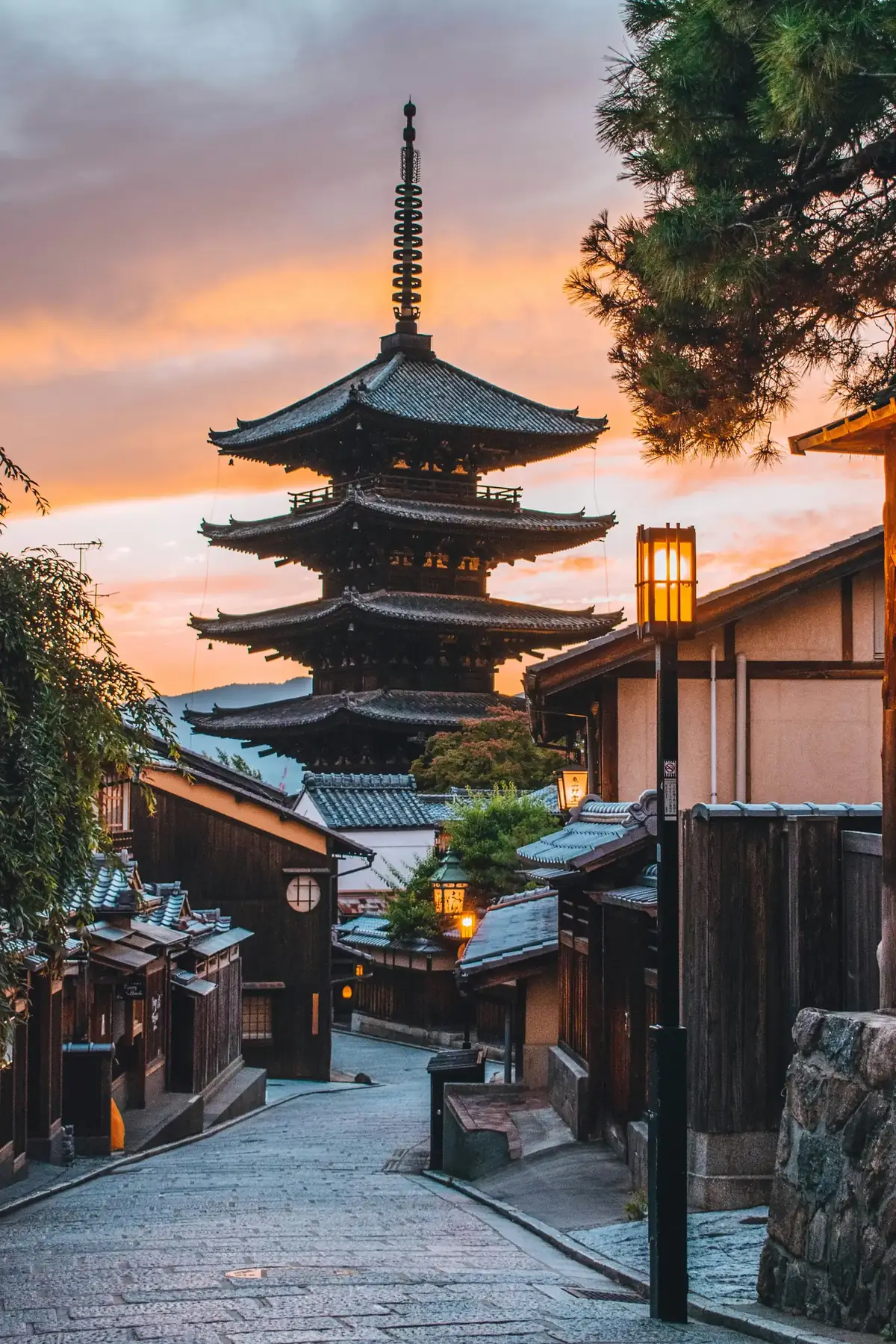
- Core · Late morning: walk down the Ninenzaka & Sannenzaka approach lanes: preserved machiya, teahouses, sweets.
- Optional: Yasaka Shrine + Maruyama Park in the afternoon. Only if you've still got energy.
- Optional: guided evening Geisha & Gion History Walk on Viator: atmospheric, low-energy way to cap the day.
Arashiyama morning, free afternoon
- Gion → Saga-Arashiyama by JR or Hankyu+Randen (~25–35 min, ≈¥240–¥400 pp). Just tap your IC card.
- Morning: Bamboo Grove + Tenryu-ji garden (≈¥500 + ¥300 buildings), a top November foliage garden, then the Togetsukyo Bridge. The Hatto (Dharma Hall) is running a special autumn exhibition of Matazo Kayama's Cloud Dragon ceiling painting daily 9:00–16:30, September 19 through December 6, 2026. Your trip falls inside that window.
- Lunch: yudofu by the river.
- Afternoon: return to Gion. Rest, or join an optional private tea ceremony + kimono.
Book Tea Ceremony + Kimono on Viator →
The free local wander day
- Morning coffee somewhere good (Weekenders, % Arabica, etc.).
- Graze Nishiki Market ("Kyoto's Kitchen"): go before 11am to beat the crowds.
- Lunch around Kawaramachi. Wander into whatever looks right.
- Sunset walk along the Kamo River. Watch the herons. That's the brief.
No Viator link on this day, by design. The moments worth telling people about years later almost never come from a booked tour.
Torii gates, then south to Osaka
- Tip: forward your luggage Kyoto → Osaka via takkyubin (≈¥2,000/bag) so you're hands-free for Fushimi.
- Gion → Fushimi Inari Taisha via Keihan (~15 min, ≈¥160 pp). Free, open 24h. Walk as much of the torii summit loop as you want.
- Fushimi Inari → Osaka/Namba via Keihan + Midosuji (~50 min, ≈¥420 pp).
- Check in at Cross Hotel Osaka. Settle, shower, change.
- Evening: Dotonbori neon stroll, 1 min from the hotel, + dinner at Mizuno okonomiyaki.
Nara: bow to a deer, then to a Buddha
- Namba → Nara on the Kintetsu line (~40 min, ≈¥570 pp).
- Nara Park: bowing deer roam free. Buy shika senbei (deer crackers) ¥200 from a vendor.
- Todai-ji: the Great Buddha hall (≈¥800; normal daily access in November, no special ceremony to plan around). Followed by Kasuga Taisha, the lantern-lined shrine. Bonus if you travel late: on December 16, Todai-ji holds the priest Rōben anniversary and unveils several national-treasure Buddhist images at the Founder's Hall, Hokke-dō, and Shunjō-dō. Details on the temple site.
- Lunch in the Naramachi merchant lanes: kakinoha-zushi (persimmon-leaf sushi), mochi, tea houses.
- Evening back in Namba: Kushikatsu Daruma in Shinsekai. (No double-dipping the sauce!)
One last graze, then home
- Check out by 11am. Store bags at reception.
- Morning option A: Osaka Castle park grounds (autumn color) - park free, tower ≈¥600. Midosuji line ~15 min.
- Morning option B: Kuromon Ichiba Market for a final graze (tuna sashimi, takoyaki). Walkable from Namba.
- Namba → KIX via Nankai Rapi:t (~40 min, ≈¥1,450 pp; regular express ≈¥930).
Where to eat.
Four dinners worth planning the day around, plus the casual market grazes that fill the in-between meals. Reserve the kaiseki houses several weeks ahead. Gion Michelin spots and counter-only places fill up fast in November.
Kikunoi (Kyoto · S. Higashiyama)
Giro Giro Hitoshina (Kyoto · Kiyamachi)
Mizuno (Osaka · Dotonbori)
Kushikatsu Daruma (Osaka · Shinsekai)
Kyoto: Nishiki Market for tofu, tamagoyaki, pickles, soy-milk donuts (before 11am). Pontocho Alley for yakitori. Arashiyama river for yudofu and yatsuhashi sweets. Osaka: Kuromon Market for tuna sashimi at Entoki Maguro, takoyaki at WANAKA. Nara: Naramachi lanes for kakinoha-zushi.
Travel insurance.
Travel insurance is the unglamorous line item that protects everything else you booked for a long-haul Japan trip. Two things go sideways most often: a missed or cancelled flight on the way out, and a small medical issue mid-trip. The cheapest cover handles both.
A note: I'm not a licensed insurance agent. What follows is what I personally look for in a travel policy. Always review the actual policy documents and your own needs before buying.
Faye Travel Insurance
Medical & evacuation: I personally look for at least $100K medical and $250K evacuation coverage. Japan's healthcare is excellent but pay-out-of-pocket-first; you want reimbursement to work cleanly. Trip interruption: covers if you have to fly home early. Pre-existing-condition waiver if you have one (typically must be purchased within ~14 days of the first trip deposit; confirm timing with the insurer). As of 2026, Faye's standard plan includes all of the above, but product features change, so check the current policy documents on Faye's site before you buy.